Every order a distributor places for someone else’s branded surgical and dental instruments is building the manufacturer’s brand equity in their market, not their own — and every hospital or dental practice that standardises on that brand is a customer the distributor holds in relationship but does not own in product. The moment a competitor offers the same brand at a lower margin, that relationship advantage evaporates without the customer changing anything they buy. Private label surgical and dental instrument programs solve this problem at the structural level: by owning the product, you own the relationship in a way that a catalogue reseller cannot replicate.
The Real Commercial Advantage of Private Label Surgical and Dental Instruments
When a distributor resells branded wholesale surgical and dental instruments, the brand owner’s margin is embedded in the unit cost they pay — typically 15–30% on established medical instrument brands, depending on category and brand premium. Removing that embedded margin from the cost structure by moving to a private label program means every unit of surgical and dental instruments sold either generates a higher gross margin, supports a lower competitive price point in tender cycles, or both simultaneously. For a distributor turning $600,000 annually in surgical and dental instrument sales, a 20% margin recovery on half that volume is a six-figure structural improvement that does not require a single additional sale.
The retention argument is equally specific. A hospital that standardises its surgical and dental instrument sets on your brand has built switching costs into its own operations — CSSD validation cycles, staff instrument familiarity, and procurement system records all work against changing supplier. A distributor reselling a brand they do not own faces none of those switching costs in reverse: a competitor with a lower price on the same catalogue removes them from the account without the customer changing their product at all.
Owning a private label surgical and dental instrument line also transforms market positioning in ways that compound over time. Tender frameworks across GCC health ministries, NHS supply frameworks, and Southeast Asian hospital procurement systems differentiate between brand owners and catalogue distributors when evaluating contract eligibility — with brand owners accessing higher-value, longer-term contract structures. A private label surgical and dental instrument brand is not a branding exercise; it is a positioning reclassification that opens procurement categories that are structurally inaccessible to catalogue resellers.
Why Private Label Surgical and Dental Instruments Are More Accessible Than Most Brands Think
MOQ Accessibility Has Changed
The assumption that private label surgical and dental instrument programs require large minimum commitments no longer reflects the operational reality of Sialkot’s export infrastructure in 2026. Professional export operations partners now structure private label surgical and dental instrument programs from 500 units per product line — a threshold accessible to a regional distributor at 300,000–500,000 in annual instrument revenue, not only to established multinational device companies. At 500 units with per-unit costs ranging from 8–25 depending on instrument complexity and category, an initial private label program across two or three product lines can be launched for an investment that competes directly with a quarter’s catalogue marketing spend.
The Timeline Is Shorter Than You Think
A well-managed private label surgical and dental instrument program runs 10–14 weeks from initial brief to export-ready branded shipment when the brand’s artwork is prepared and the instrument specification is confirmed at the start. The timeline breaks down as: 1–2 weeks for artwork review and specification lock; 4–6 weeks for production coordination; 1–2 weeks for QC inspection and branded packaging; and 1–2 weeks for export documentation and freight clearance. Brands that lose time in this process almost always do so in the first phase — entering the program without finalised logo files, an approved packaging design, or a confirmed destination market compliance requirement, which delays specification lock and pushes every subsequent stage back by the same amount.
You Do Not Need to Be a Compliance Expert
The compliance requirements for private label surgical and dental instrument programs — destination market regulatory labeling, UDI marking, branded packaging standards — are managed by the export operations partner as a standard program deliverable, not a consultancy engagement the brand manager handles independently. A professional export partner maps each instrument to the correct compliance standard for each destination market — US, EU, or GCC — and coordinates the regulatory documentation within the program timeline. For a growing medical brand, this means the compliance cost of launching a private label surgical and dental instrument program is built into the program structure, not added as an unpredictable overhead on top.
What a Professional Private Label Surgical and Dental Instrument Program Actually Includes
A complete private label and OEM surgical and dental instrument program — managed end-to-end by a professional export operations partner — covers every stage from specification to delivery: production coordination with verified Sialkot facilities against the locked instrument specification, ISO 13485-compliant QC inspection of every batch before export release is approved, and CE Mark and FDA registration compliance documentation issued for each destination market as a standard program deliverable.
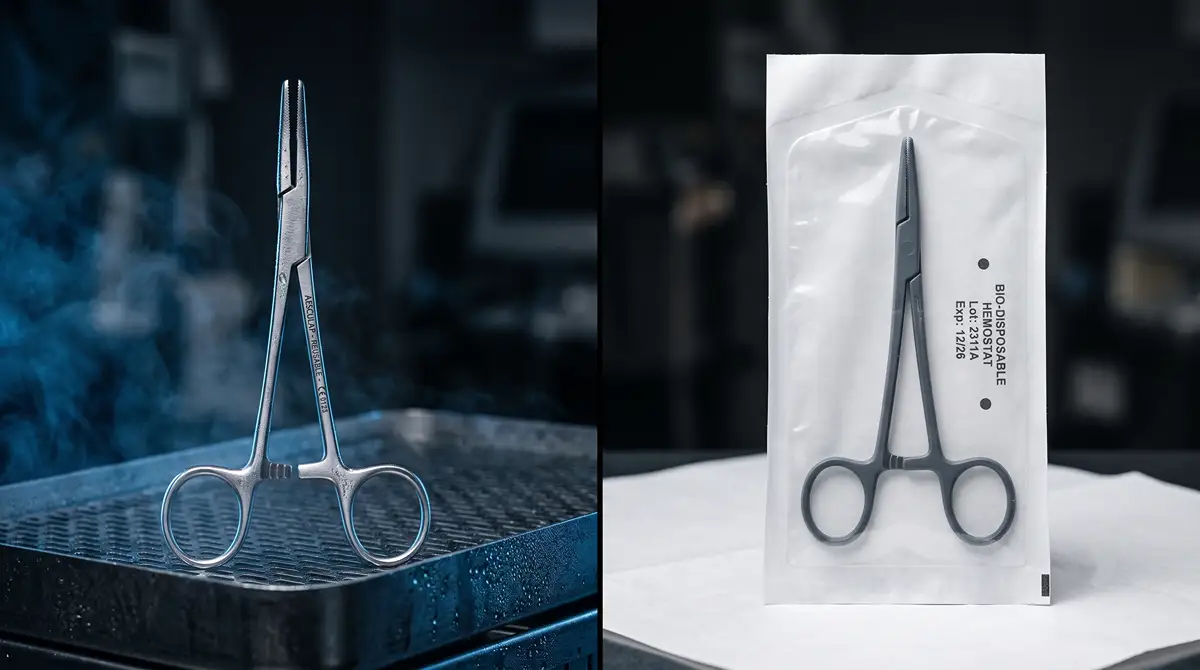
Artwork approval and UDI marking — formatted to FDA 21 CFR Part 830 for US distribution and EU MDR Annex VI for European markets — are coordinated alongside branded packaging production, covering custom boxes, instrument inserts, and sterilization pouches carrying the client’s logo, product name, and catalogue codes. Export documentation — commercial invoice, packing list, certificate of origin, and destination-specific compliance certificates — is issued per shipment, with no component of the documentation pack left to the brand to assemble independently.
The difference between a private label surgical and dental instrument program that scales and one that stalls at the second order is almost always end-to-end ownership — one partner accountable for the full journey from brand brief to branded delivery. Fragmented program management, where the brand manages separate relationships for production, compliance, packaging, and freight, does not fail at scale; it fails at the first compliance documentation request or the first branded packaging error, before there is a second order to prove the model works.
Three Types of Medical Brands That Scale Fastest with Private Label
The Regional Distributor Building Market Exclusivity
A regional surgical instruments distributor currently reselling established brands into hospital and dental clinic networks faces an identical competitor threat in every tender cycle — any rival with access to the same catalogue can undercut on price and win the account without the customer changing their product. A private label surgical and dental instrument line removes that threat entirely by making the product exclusive: competitors cannot quote like-for-like because the instrument exists only under the distributor’s brand. In GCC and Southeast Asian markets where hospital procurement frameworks require a minimum number of branded surgical and dental instrument product lines for tender eligibility, brand ownership is not a commercial advantage — it is an entry requirement.
The Medical Device Brand Expanding Into New Instrument Categories
An established medical device brand with a strong position in one category — cardiovascular instruments, for example — that wants to expand into dental or OEM orthopedic surgical instrument categories faces a significant market entry cost if a new brand is launched from scratch for each expansion. A private label surgical and dental instrument program allows the brand to extend its existing brand name across new instrument categories by coordinating production of a new specification under an established brand identity — without the marketing investment of a separate label launch. The category expansion timeline collapses from a 12–18 month brand-building process to a 10–14 week program coordination cycle, with the brand entering new categories at full private label margin from the first shipment.
The E-Commerce Medical Supply Business Moving Upstream
An online medical supply retailer currently reselling catalogue surgical and dental instruments operates in a market where every product they list is also available on every competing platform — margin compression is structural and accelerating with each catalogue cycle. Moving from catalogue reselling to private label surgical and dental instrument ownership changes three things simultaneously: the gross margin on every unit improves by removing the brand markup from the cost structure; the product becomes exclusive to their platform, eliminating direct price comparison; and their customer relationships shift from transactional to brand-anchored, with repurchase driven by product loyalty rather than price availability. For an e-commerce medical supply business, private label dental instruments wholesale and surgical instrument lines are not a branding upgrade — they are a fundamental change in business model economics.
The Questions to Ask Before Launching Your Private Label Surgical and Dental Instrument Program
Answer these six questions before committing to a private label surgical and dental instrument program — they will either confirm you are ready or identify what needs to be in place before you begin:
- Which destination markets will your private label surgical and dental instruments enter first, and do you know the specific compliance documentation requirements for each of those markets?
- Is your brand identity — logo files in vector format, brand guidelines, and packaging design specifications — finalised and ready to submit to an export operations partner without additional design work?
- What is your available budget for an initial private label program launch, and does that budget support 500–1,000 units per product line across two or three surgical and dental instrument categories?
- Do you have a confirmed distribution channel — hospital accounts, dental distributor relationships, or e-commerce fulfilment — ready to absorb the first branded shipment within the program lead time?
- Which instrument categories — general surgical, dental, orthopedic, ENT, cardiovascular — are the highest commercial priority for your private label program, and do you have a reference specification or existing instrument you want to match?
- Have you confirmed that your selected export operations partner can deliver an end-to-end private label surgical and dental instrument program — from specification lock through to customs-cleared branded delivery — under a single managed relationship?
How Bio Tech Globals Coordinates Private Label Surgical and Dental Instrument Programs
Bio Tech Globals coordinates private label surgical and dental instrument programs as an export operations partner — not a production facility — across US, EU, and GCC destination markets, managing the complete program from initial brief through specification lock, production coordination with verified Sialkot instrument facilities, QC inspection, branded packaging, and export-ready delivery. Every program begins with a structured brief review covering instrument categories, target markets, brand asset status, and MOQ requirements — and a complete OEM program proposal is returned to the brand within 5 business days. The proposal is an operational document, not a sales deck: it covers instrument specification, unit pricing by product line, compliance documentation scope by destination market, branded packaging options, and confirmed lead time from specification lock to first shipment.
Private label surgical and dental instrument programs are structured from 500 units per product line, with programme coverage across general surgical, orthopedic, dental, cardiovascular, ENT, and gynecology instrument categories available on a consolidated purchase order. For brands expanding into OEM orthopedic surgical instruments or dental instrument categories alongside an existing surgical instrument range, both are coordinated within a single export operation — one compliance documentation pack per destination market, one freight booking covering the full consignment, and one named account coordinator accountable from brief submission through to cleared branded delivery.
For distributors who require reusable and disposable surgical instruments exporter capability alongside a private label program — sourcing both branded and unbranded instrument categories from the same operation — both are coordinated within a single consolidated purchase order, eliminating the need to manage separate supplier relationships across branded and catalogue instrument lines. The 5-business-day program proposal commitment applies to all new private label surgical and dental instrument program enquiries, and brands that are not yet ready to commit can use the proposal review to evaluate the program structure, timeline, and compliance documentation framework before placing a production order.
If you are ready to take the first step toward your private label surgical and dental instrument program, sharing your instrument categories, target markets, and brand assets with the Bio Tech Globals export team is a low-commitment starting point — you receive a complete, structured program proposal within 5 business days, covering specification, pricing, compliance, and timeline, before any production commitment is required.