
The wrong wholesale surgical and dental instrument supplier does not announce itself at the quotation stage — it announces itself when a shipment arrives without a certificate of conformity, when a batch of instruments fails your incoming inspection before distribution, or when the contact who confirmed your order goes silent after your advance payment clears. Each of these scenarios is a failure in evaluation, not just in execution. The framework below is built for procurement officers who have experienced one of them and need a structured approach to ensure it does not happen again.
Why Most Wholesale Surgical and Dental Instrument Supplier Searches Start Wrong
The default evaluation sequence for most procurement teams begins with price — the lowest landed cost per unit advances to the next round, and everything else is secondary. For wholesale surgical and dental instruments specifically, this approach fails at the first calculation: a quote that excludes freight, compliance documentation preparation, and customs clearance fees can be 20–35% lower than a fully inclusive quote, while actually being more expensive when the real delivery cost is modelled against what the shipment requires to enter your market.
The second failure is category fragmentation. Most buyers evaluate wholesale surgical instruments suppliers and dental instruments wholesale suppliers as separate processes — separate quotes, separate freight bookings, and separate compliance documentation packs from different vendors managing different accountability chains. When a compliance issue surfaces or a delivery is delayed, there is no single partner who owns the problem, and the resolution timeline reflects that distributed accountability.
The result is a procurement structure that costs more to manage and carries more compliance exposure than it needs to. The seven criteria below address each of these failure points with a framework that can be applied to any wholesale surgical and dental instrument supplier before they reach your shortlist.
The Seven Criteria That Define a Reliable Wholesale Surgical and Dental Instrument Supplier
These criteria are grounded in the operational differences between exporters who perform consistently over multiple order cycles and those who perform adequately on a first order and underdeliver on the second. Apply them as a structured evaluation filter, not a general checklist.
Criterion 1 — Verified Export Track Record
A professional wholesale surgical and dental instrument supplier should be actively exporting to 30 or more destination markets and should be able to provide export documentation evidence — commercial invoices, packing lists, and certificates of origin — from their last 12 months of trade. Ask specifically whether they hold active supply relationships with surgical instruments distributors or dental instrument buyers in your target market, whether that is the US, EU, GCC, or Southeast Asia, and whether those references are available on request. A supplier who cannot provide this evidence has an unverified export record regardless of what their website or catalogue claims about their international reach.
Criterion 2 — Compliance Certification and Documentation Standards
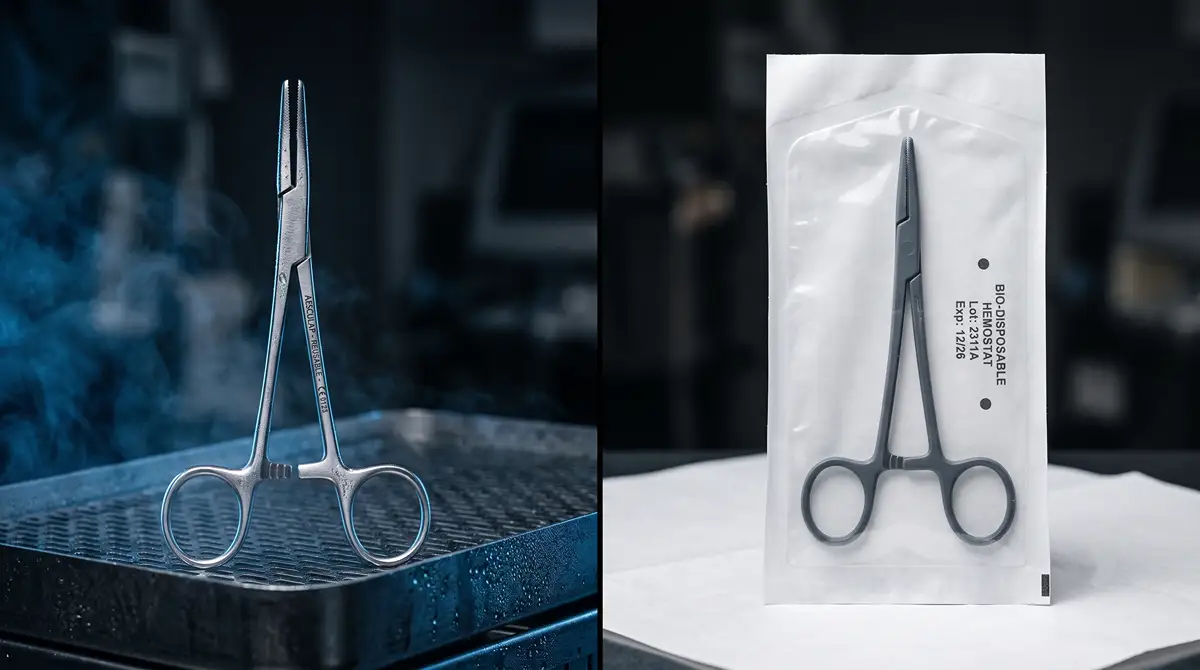
ISO 13485 certification, CE Mark compliance, and FDA registration are the three baseline certifications a wholesale surgical and dental instrument buyer must verify before advancing any supplier to the next evaluation stage. ISO 13485 confirms that a supplier’s quality management system has been independently audited against the standard specific to medical device operations — without it, your obligations as an importer or distributor of record in regulated markets have no upstream compliance support. CE declaration of conformity, FDA registration confirmation, certificate of conformity, certificate of origin, packing list, and commercial invoice must accompany every shipment as standard deliverables — if your supplier requires a special request to produce any of these documents, remove them from your shortlist immediately.
Criterion 3 — Transparent MOQ and Lead Time Commitments
A professional wholesale surgical and dental instrument exporter in 2026 should offer minimum order quantities from 500 units per product line for catalogue instruments, with tiered pricing visible at 1,000 and 5,000 unit thresholds so you can model order economics before committing. Standard lead times should be confirmed in writing in the quotation itself — 4–6 weeks from purchase order for catalogue instruments — not estimated verbally by a contact who cannot commit to it in writing. When requesting wholesale orthopedic surgical instruments quotes or multi-specialty dental instrument pricing across destination markets, require lead time confirmation as a line item in the quotation document, with a defined escalation procedure if that timeline is not met.
Criterion 4 — QC Process and Pre-Shipment Inspection
A formal QC process for wholesale surgical and dental instrument export includes incoming inspection at the production stage, in-process inspection against the confirmed specification, and a pre-shipment inspection with a written QC report issued to the buyer before the consignment is sealed for freight. Request actual pre-shipment QC reports from their last three comparable orders — specific to a named instrument category and destination market, not a blank template — and review whether the report structure reflects a real inspection process or a checkbox exercise. A supplier who cannot produce pre-shipment QC documentation on request either does not run a formal inspection process or does not document it, and either conclusion carries the same procurement risk.
Criterion 5 — Freight, Customs, and Export Documentation Ownership
A reliable wholesale surgical and dental instrument supplier manages the complete export chain — freight forwarding from the point of production, customs clearance at the export origin, and handover to your nominated freight agent with a complete documentation pack. When evaluating wholesale surgical supply capability, ask explicitly whether freight management is handled directly by the exporter or subcontracted to a broker the supplier has no operational control over — if they cannot track a shipment between their facility and your freight agent in real time, your procurement schedule is dependent on a chain they do not own. Export documentation — commercial invoice, packing list, certificate of origin, and destination-appropriate compliance documentation — should be generated and issued by the exporter, not assembled by you from multiple sources after arrival.
Criterion 6 — Single-Point Accountability vs Multi-Vendor Complexity
Managing ENT surgical instruments wholesale suppliers, dental hygiene instruments wholesale suppliers, and general surgical instrument exporters as separate vendor relationships multiplies your compliance documentation workload, your freight overhead, and your risk surface with every order cycle. A consolidated wholesale surgical and dental instrument export partner — covering general surgery, orthopedic, dental, cardiovascular, ENT, and gynecology instrument lines — delivers one purchase order, one compliance documentation pack per destination market, one freight booking, and one named contact accountable for everything across the full consignment. For procurement teams managing multi-category instrument supply into multiple markets simultaneously, the reduction in management overhead and compliance exposure from a consolidated sourcing model is measurable and immediate.
Criterion 7 — Communication Standards and Response Commitments
A professional wholesale surgical and dental instrument supplier returns a structured, itemised quotation within 48 hours of receiving a complete instrument brief — not an informal per-piece price list and not a request for a call before they can quote. That quotation should include unit pricing by SKU, freight cost by destination market, compliance documentation cost confirmation, lead time by product category, and packaging specification options. An oem surgical instruments programme enquiry or a complex wholesale dental and surgical instrument quote that returns as a single-line price without documentation breakdown is a signal that the supplier’s operational structure is not configured for a managed, regulated distribution relationship.
Red Flags That Should End Your Evaluation Immediately
The first red flag is an inability to provide traceable compliance documentation on request. If a wholesale surgical and dental instrument supplier cannot produce a certificate of conformity and a certificate of origin from a recent comparable shipment within 48 hours, they do not maintain the documentation infrastructure required for regulated market distribution — and that gap will become your gap the moment your first shipment arrives at customs.
The second is the absence of a named account contact. If every communication with a wholesale surgical and dental instrument supplier goes through a shared inbox, a rotating sales team, or a general enquiries address, there is no individual who owns accountability for your order — and no one to hold responsible when a milestone is missed or a consignment is delayed.
The third is a refusal to provide pre-shipment samples before a bulk surgical and dental instrument order is placed. A supplier who will not provide samples from a new instrument category before your first bulk commitment is asking you to stake your procurement reputation on an uninspected product. This is not a negotiating position — it is a non-negotiable evaluation standard.
The fourth is an inability to provide export documentation history from previous shipments. A wholesale surgical and dental instrument supplier who cannot show commercial invoices, proof of delivery, or packing lists from their recent comparable orders has no verifiable export record, only claimed capability — and those two things are not the same.
The fifth is a quotation that arrives without freight, compliance documentation cost, and packaging itemised as separate line items. A bundled cost structure in a wholesale surgical and dental instrument quote indicates either that the supplier does not know their true landed cost, or that they are structuring pricing to make direct comparison with more compliant exporters artificially difficult.
Questions to Ask Every Wholesale Surgical and Dental Instrument Supplier Before You Commit
Send this list as a written pre-qualification filter to every wholesale surgical and dental instrument supplier before advancing them to your formal shortlist:
- How many destination markets are you currently exporting surgical and dental instruments to, and can you provide commercial invoice and export documentation from your last 12 months of trade in my target market?
- What compliance documentation do you issue as standard with every wholesale surgical and dental instrument shipment, and is that documentation specific to US, EU, and GCC destination requirements respectively?
- What is your minimum order quantity per product line for catalogue surgical and dental instruments, and what are your published unit prices at 500, 1,000, and 5,000 unit thresholds?
- Can you provide a pre-shipment QC inspection report from a comparable recent shipment — same instrument category, same destination market — within 48 hours of this request?
- Do you manage freight forwarding and customs clearance in-house as part of your export operation, or does your freight hand off to a third-party agent you have no direct operational control over?
- What is your standard lead time from confirmed purchase order for catalogue surgical and dental instruments, and what written escalation commitment do you provide if that lead time is not met?
- Can you provide pre-shipment samples of a new surgical or dental instrument category before a bulk purchase order is placed, and what is your standard sample timeline and cost policy?
- Can you provide contact references from active surgical instruments distributor or dental wholesale buyer relationships in the US, EU, or GCC market within 48 hours of a request?
How Bio Tech Globals Meets These Seven Criteria
Bio Tech Globals operates as an export operations coordinator for wholesale surgical and dental instrument programmes across the US, EU, GCC, and Southeast Asia — managing the complete operation from instrument procurement through compliance documentation, branded packaging, and freight clearance as a single coordinated programme. Against Criteria 1 and 6, active export relationships span 50+ destination markets across both surgical and dental instrument categories — including general surgery, orthopedic, dental, cardiovascular, ENT, and gynecology lines — all available on a consolidated purchase order with references from active distribution relationships available on request.
Against Criteria 3 and 4, wholesale surgical and dental instrument programmes are structured from 500 units per product line, with 4–6 week lead times from confirmed purchase order for catalogue instruments confirmed in writing in the quotation. A pre-shipment QC verification report is issued with every consignment before export release, covering mark accuracy, material conformity, and specification compliance against the confirmed purchase order. Against Criterion 5, freight forwarding, customs clearance, and a complete export documentation pack are managed as part of the standard export operation — not handed off to a third-party agent operating outside Bio Tech Globals’ direct coordination.
Against Criterion 7, a structured, itemised quotation — covering unit pricing by SKU, freight by destination, documentation scope, and confirmed lead time — is returned within 48 hours of a complete surgical and dental instrument brief. Against Criterion 2’s documentation standard, the correct compliance documentation pack for each destination market is generated automatically from the purchase order and issued with every shipment as a standard deliverable. Every programme is managed by a named account coordinator who holds accountability from brief submission through to customs-cleared delivery.
If the framework in this post reflects the standard you hold your wholesale surgical and dental instrument suppliers to, the next logical step is to apply it to Bio Tech Globals directly — request the compliance documentation pack, ask for a pre-shipment sample from your instrument category, and submit an RFQ to evaluate the quotation response against Criterion 7.
→ Submit a Trade Enquiry and Receive Our Compliance Documentation Pack.